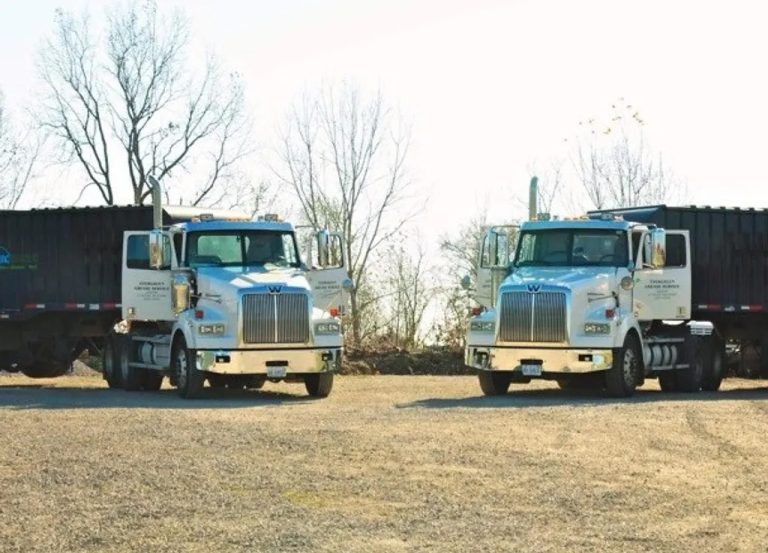


Freight doesn’t move on good intentions. It moves on diesel, powering the garbage trucks, snow plows, construction equipment, and long-haul rigs that keep the economy running. Nearly a quarter of all carbon emissions in the U.S. come from transportation, and more than 70% of freight moves by truck. Electrification works well for short-range, light-load vehicles, but for the heavy-duty assets that do the hardest work, it falls far short. A 2022 Ryder study found that fleets need approximately 2.1 electric trucks to replace every diesel truck. That is twice the vehicles, twice the drivers, twice the charging infrastructure.
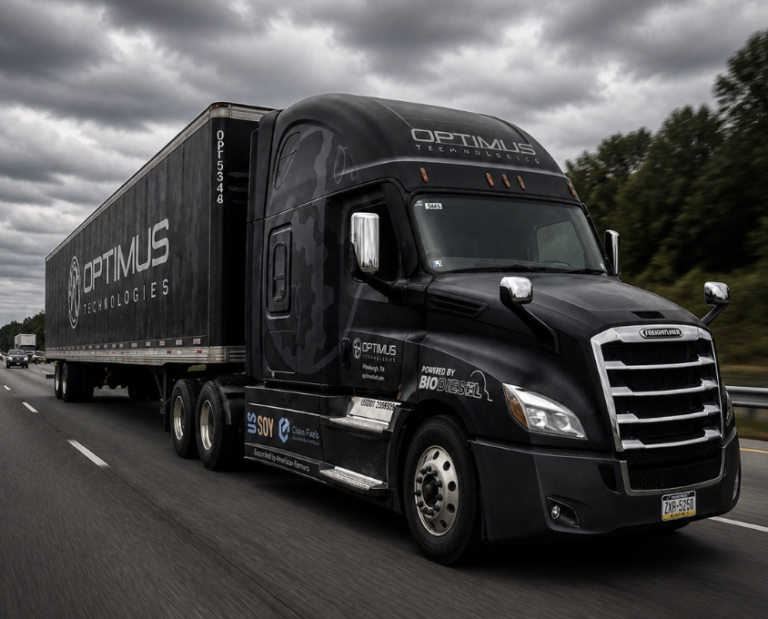
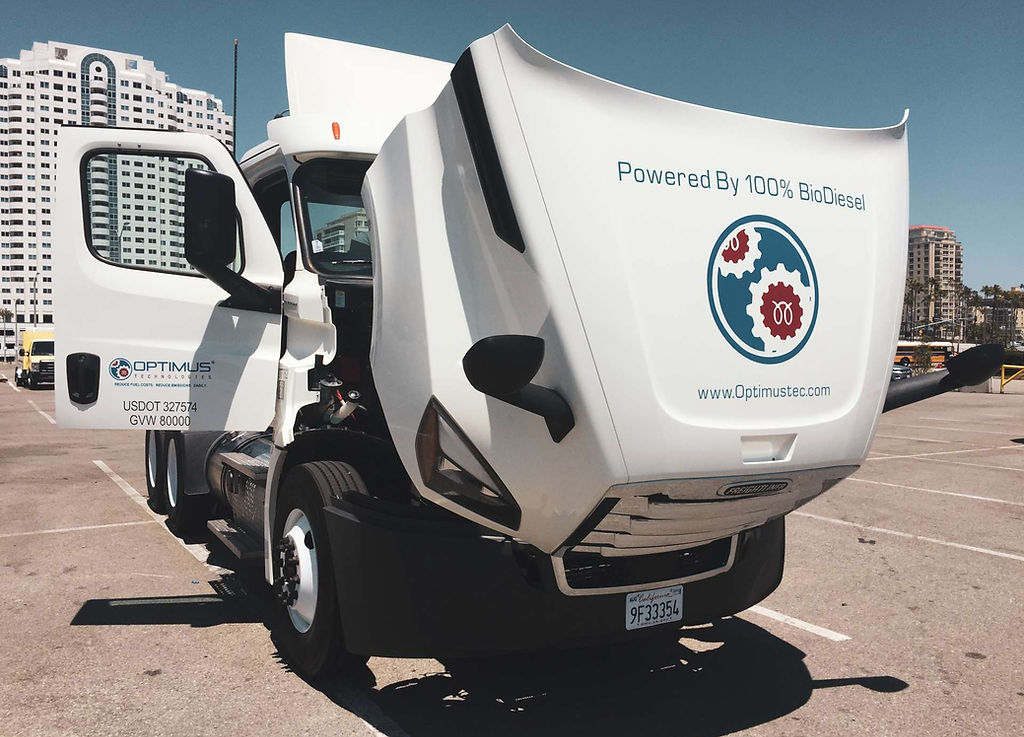
Optimus Technologies is solving this problem from a different angle. Rather than replacing diesel engines, the Pittsburgh-based company builds technology that upgrades them to run on 100% biodiesel, a renewable fuel made from used cooking oils, fats, and agricultural byproducts. The result is a lower-emissions, lower-cost path to decarbonization that works with the trucks and infrastructure fleets already have.
From a Used VW Jetta to a National Fleet Solution
Colin Huwyler didn’t set out to build a company. He set out to find an affordable, sustainable way to commute.
When he started college and faced an hour-long commute each way, Huwyler began researching alternatives. He came across a company selling conversion kits that allowed passenger diesel cars (like the Volkswagen Jetta) to run on raw used cooking oil collected directly from restaurants. He had no mechanic experience. He bought the kit, bought a Jetta, and installed it himself.
The parts kept breaking. So he started fixing them. Then rebuilding them. Then improving them.
When a few articles covered what he was doing, other people reached out. “Could you help me install the same kit?” or “Can you help troubleshoot my issues with the kit?”, strangers asked. Huwyler started helping others, gradually swapping in his own more durable components. That informal operation became a company called Fossil Free Fuel, building and selling conversion kits for passenger vehicles and, eventually, collecting and reselling the used cooking oil itself.
The pivot to heavy-duty trucks happened in 2009, when a local construction company and a grocery distributor came to Fossil Free Fuel with a question: could they do for big diesel engines what they were doing for small ones?
“Looking at it naively, we thought, how hard can it be? We’ll just take what we’re doing on a small scale and make it bigger,” Huwyler recalls. “That absolutely was not the case.”
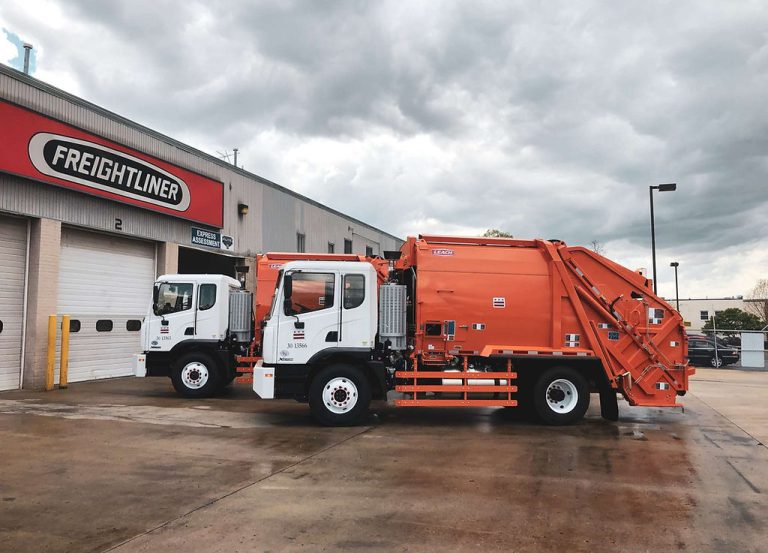
He founded Optimus Technologies in 2010. It took eight years of development, regulatory compliance work, and engineering iteration to bring a true commercial product to market. In 2018, Washington, D.C.’s Department of Public Works became the first paid pilot customer, outfitting six garbage trucks with the technology. The City of Ames, Iowa followed shortly after.
Both are still customers today.
The Solution: A Scalable Platform Built on Two Products
The On-Truck System
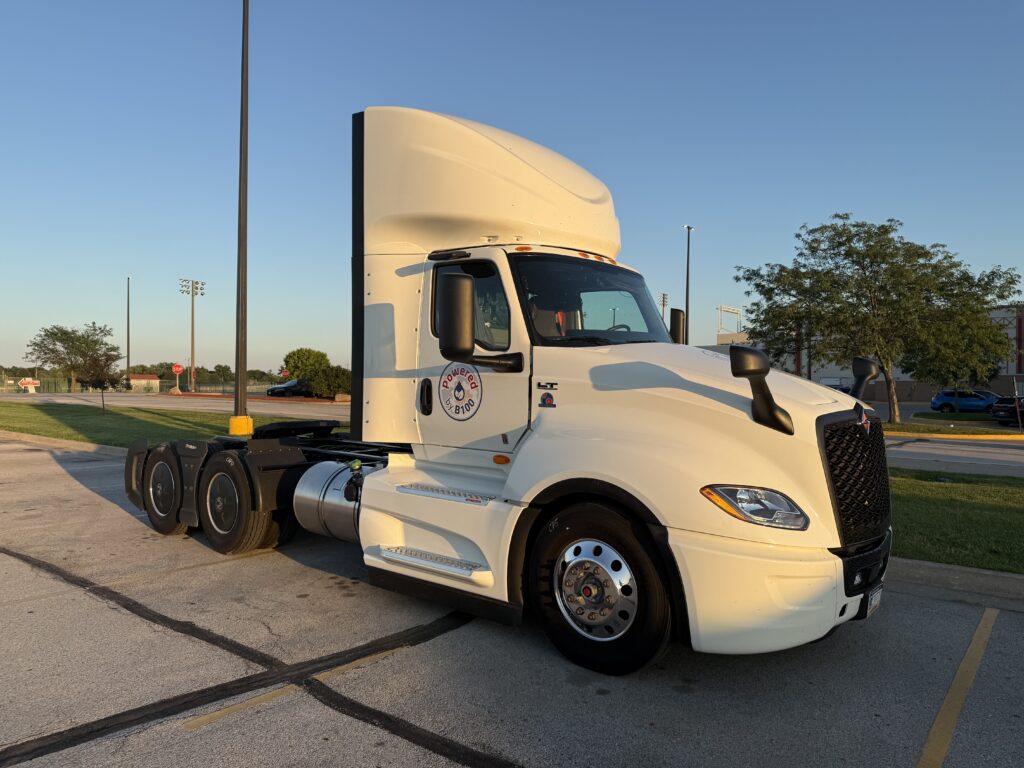
 Optimus Technologies’ core product upgrades diesel engines to run on B100 biodiesel. The technology is installed either on existing fleet vehicles or integrated into new trucks at the point of manufacture giving customers two pathways to adoption. Since the system never prevents the engine from using conventional diesel, fleets maintain full operational flexibility.
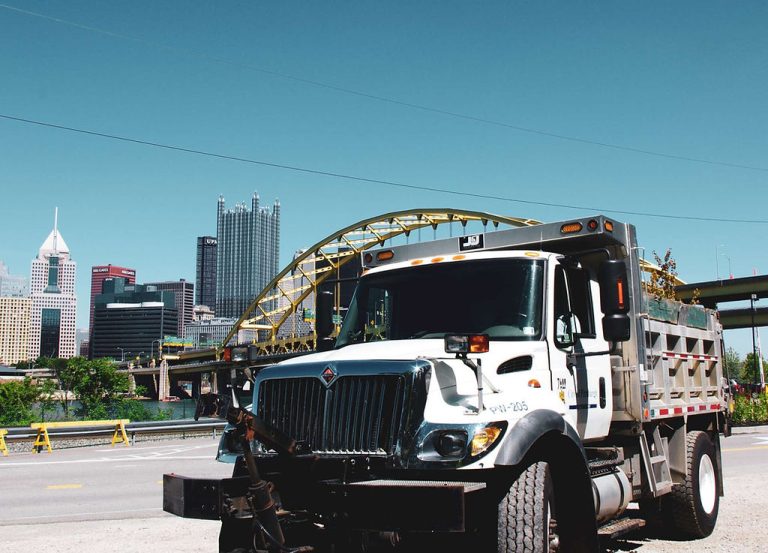
Early customers were primarily municipalities with centralized, return-to-base operations: vehicles leave a depot, complete their routes, and return to fuel. Washington, D.C. now has more than 200 Optimus-equipped trucks across its snow plow, garbage, and water and sewer fleets. Every new large diesel vehicle the city purchases is integrated with the technology.
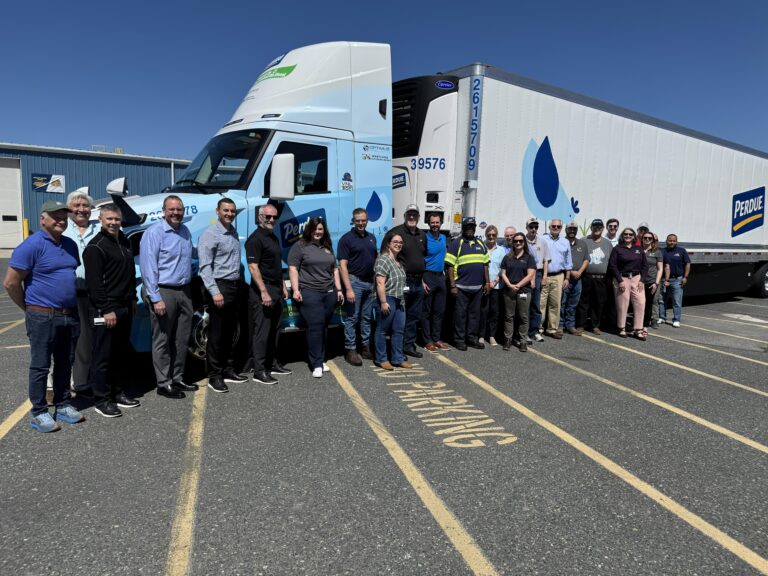
From municipal fleets, Optimus expanded into private fleets. Companies like PepsiCo and ADM that operate hub-and-spoke distribution networks run predictable routes from centralized locations, making biodiesel fueling practical at scale.
Most recently, Optimus has entered the over-the-road trucking market through a partnership with Pilot Flying J, the largest commercial truck fueling network in the country. In 2025, Pilot Flying J opened its first three sites with 100% biodiesel on-site opening access to the long-haul freight segment.
SMARTFuel: Solving the Human Problem
As Optimus began scaling, fleets raised a practical concern: with a mixed fleet, what stops drivers from accidentally fueling a non-equipped truck with biodiesel?
“If there’s a possibility they’re going to do that, they’re going to do that,” Huwyler says. And putting B100 into an engine not configured for it is not a minor issue.
To solve this, Optimus developed SMARTFuel, a fuel management system that physically prevents misfueling. RFID chips are installed on all Optimus-equipped fuel tanks. A corresponding reader on the fueling dispenser nozzle checks for the chip when the nozzle is inserted. If no chip is detected, the pump won’t activate. The wrong truck can’t receive the wrong fuel.
SMARTFuel is now a standard and essential part of the Optimus platform. Customers don’t just appreciate it — they require it to scale the on-truck technology across large, mixed fleets.
Innovation Works: Funding the Technology That Unlocked the Market
Optimus Technologies’ first outside investment came from Idea Foundry, which provided early capital to validate the concept. As customer interest grew and capital needs increased, the company turned to angel investors and to Innovation Works.
Innovation Works‘ first engagement with Optimus came through its Technology Commercialization Initiative (TCI), a program focused on taking a single product through a defined commercialization pathway. Innovation Works funding supported the development of SMARTFuel, the RFID-based misfueling prevention system that proved critical to fleet adoption at scale.
“That original funding helped with the development of the technology that was a critical unlock for us,” Huwyler says. “Customers would ask about driver misfueling, and we could say we have a technology that prevents that.”
Innovation Works has continued to participate in Optimus’ financing rounds as the company has hit growth milestones, providing consistent capital support throughout the company’s development.